



Molino Dallagiovanna: Italian Milling Craft Since 1832
This archive image is published by Molino Dallagiovanna as part of its brand history.
For nearly two centuries, Molino Dallagiovanna has been turning carefully selected wheat into specialist flour for pizza makers, bakers, pastry chefs and pasta makers. Founded in 1832 in Gragnano Trebbiense, Piacenza, the family mill has grown from a small grain-collecting business into an internationally recognised producer, exporting to around 67 countries.
What makes Dallagiovanna particularly interesting is the depth of its range. This is not simply a choice between Type 0 and Type 00. Its flours are developed for particular doughs, fermentation schedules and baking methods, with published specifications that help you choose with confidence.
At Ratton Pantry, we are proud to offer Italian wholesale ingredients for both home kitchens and professional production. From classic Neapolitan pizza to fresh pasta, pinsa and panettone, Molino Dallagiovanna gives you the technical choice to make your flour work harder.
From a Small Piacenza Business to a Global Mill
Molino Dallagiovanna was founded in 1832 by Mrs. Ernesta in Gragnano Trebbiense, in the province of Piacenza. The company did not own a mill at first. Instead, the family collected grain from local farmers and arranged for it to be ground at other nearby facilities.
The next important step came in 1870, when the family purchased its first stone mill. It was powered by water from the Rio Vescovo, linking the business to the traditional energy and engineering of the area. This marked the beginning of Molino Dallagiovanna as a true milling operation.
The mill continued to develop through the following decades. In 1949, the Dallagiovanna family installed its first roller mill, creating the foundation for the modern business. Later, the company introduced dedicated laboratory testing and an in-house bakery, allowing its flours to be assessed in real doughs rather than only through measurements.
Today, the business remains family-run across six generations. It is based in Piacenza, in the heart of the Pianura Padana, Italy’s main soft-wheat growing area. The mill combines heritage with detailed research, product development and international distribution.
A distinctive part of its process is washing the wheat with water before milling. Dallagiovanna says this helps to clean and condition the grain before it enters the milling process. The result is a range built around consistency, performance and clear application.
Why We Stock Molino Dallagiovanna
Technical choice for specialist doughs
Dallagiovanna gives our customers access to one of the most technically varied Italian flour ranges we carry. It is particularly strong for pizza, while also offering excellent choices for fresh pasta, laminated pastry, enriched dough and panettone.
A format for every stage
We stock several flours in smaller and professional formats. That makes it easier to test a flour before committing to a larger sack, or to keep a recipe consistent as your production grows from a home kitchen to a bakery, café or pizzeria.
Clear specifications
Published W value, P/L ratio, protein and humidity figures make it easier for professional bakers to compare products. You can select flour based on your process rather than relying on the type number alone.
Six generations of milling expertise
Since 1832, the Dallagiovanna family has refined its understanding of wheat, milling and dough. The mill is also an approved supplier of the Associazione Verace Pizza Napoletana, with flours used by pizzaioli around the world.
Why the Technical Details Matter
The W value is a measure of flour strength derived from dough testing. As a general guide, a higher-W flour is better able to tolerate longer fermentation, richer doughs, higher hydration or more demanding production. W should always be considered alongside the recommended use and your recipe.
The P/L ratio describes the balance between extensibility and resistance. “P” represents resistance to extension, while “L” represents extensibility. A balance around 0.5–0.6 is generally well suited to many pizza and bread doughs, giving a useful combination of strength and stretch.
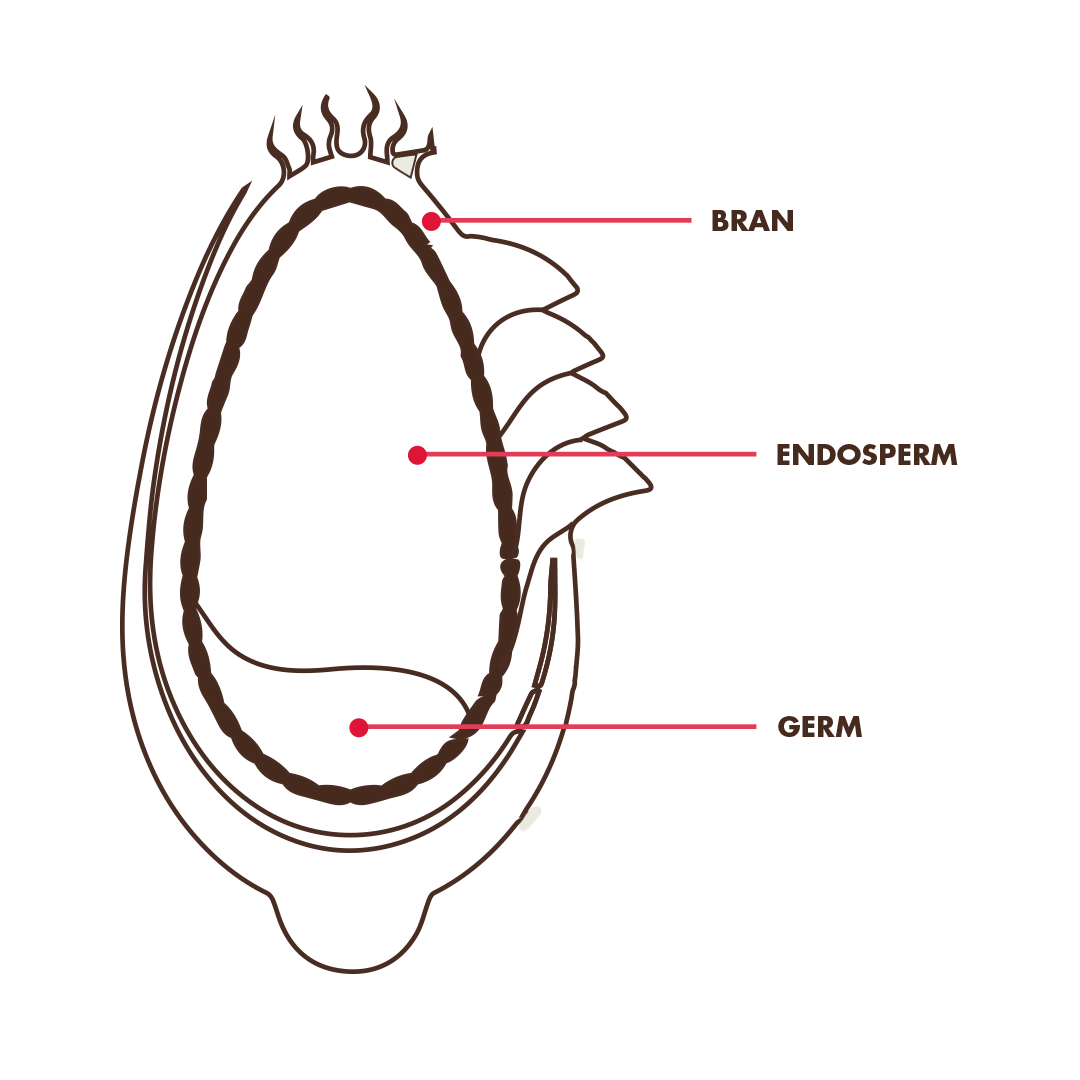
The T number describes refinement. Type 00 is highly refined, while Type 0 and Type 1 retain progressively more of the grain. However, the type number does not tell you everything about performance. A Type 00 flour may be relatively weak or exceptionally strong, so the W value and manufacturer’s intended application are more helpful when choosing.
In the Range at Ratton Pantry
Pizza and Long-Fermented Dough
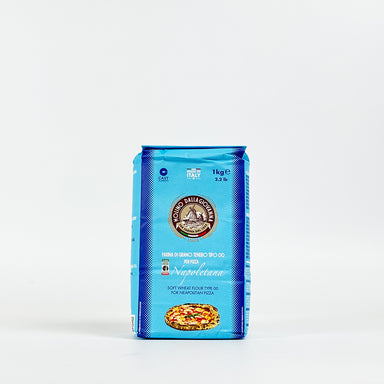
For classic Neapolitan-style pizza, La Napoletana Type 00 Pizza Flour has a W value of 310, a P/L ratio of 0.60 and 12% protein. It is available in 5kg and 10kg formats for regular baking and professional kitchens.
For a Type 0 alternative, La Napoletana 2.0 Flour has the same W 310 and P/L 0.60, with slightly higher protein at 12.5%.
When your dough requires greater strength, Uniqua Blue Speciality Type 1 offers W 390, P/L 0.55 and 14% protein for long fermentation. Pizza Flour Red Type 00 is another strong pizza option, with W 390, P/L 0.60 and 14% protein.
Strong Flour for Enriched Doughs
Manitoba Type 0 Flour has W 390, P/L 0.60 and 15% protein. It is designed for demanding doughs that need a robust gluten structure, including enriched and long-fermented recipes.
Panettone “00” Flour is formulated for highly enriched, long-fermented doughs. It is intentionally stronger than most everyday bread flours, so a dedicated bread or pizza flour will generally be easier to use for regular loaves.
Pasta, Pinsa and Specialist Baking
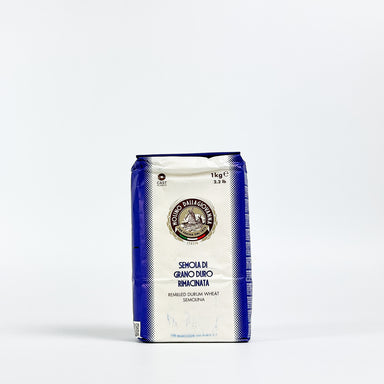
Semola Rimacinata is finely re-milled durum wheat semolina. Its warm colour and slightly textured finish make it useful for fresh pasta, selected breads and pizza dusting. Professional kitchens can also choose the 25kg format.
For fresh pasta, Triplozero Type 00 Pasta Flour offers a fine, smooth texture. For Roman-style pinsa, Oltregrano La Pinsa Flour is a dedicated blended flour.
The range also includes Nobilgrano Wheatgerm Type 0 Green, with W 340, P/L 0.55 and 13% protein, plus a Gluten Free Pizza and Bread Flour for gluten-free baking.
Complete your dough preparation with Italian Instant Dry Yeast, ready to add directly to the dough.
Which Dallagiovanna Flour Should You Choose?
- For Neapolitan pizza: Start with La Napoletana Type 00 or La Napoletana 2.0 Type 0.
- For longer fermentation: Choose Uniqua Blue, Pizza Flour Red or Manitoba, depending on the dough.
- For fresh pasta: Choose Triplozero Type 00 for soft-wheat pasta, or Semola Rimacinata for durum wheat character.
- For pinsa: Use Oltregrano La Pinsa, formulated specifically for that style.
- For panettone: Choose the dedicated Panettone “00” flour.
- For gluten-free pizza and bread: Try the Gluten Free Pizza and Bread Flour.
Explore the full Molino Dallagiovanna collection, or browse our wider range of baking supplies online to build your next bake.
Choose Italian Milling Expertise
Whether you are making pizza at home, developing an artisan bread flour blend or ordering wholesale baking ingredients for a professional kitchen, Molino Dallagiovanna offers the detail and range to help you make an informed choice.
We dispatch orders placed before 2pm Monday to Friday on the same day, with express next-day delivery options available. Trade customers can also apply for a Ratton Pantry account for dependable supply and ongoing support.
Discover Molino Dallagiovanna today. We are always happy to help you choose the right flour for your dough.
Molino Dallagiovanna FAQs
Where is Molino Dallagiovanna based?
Molino Dallagiovanna is based in Piacenza, in the Pianura Padana region of northern Italy. The mill was founded in Gragnano Trebbiense in 1832.
How many generations has Molino Dallagiovanna been a family business?
Molino Dallagiovanna has been a family business for six generations, combining traditional milling knowledge with modern laboratory testing and product development.
What does the W value mean in flour?
The W value is a measure of flour strength derived from dough testing. Higher-W flours generally tolerate longer fermentation, richer doughs and more demanding processes, although the intended application and recipe must also be considered.
What is the difference between W value and P/L ratio?
W indicates overall flour strength. The P/L ratio describes the balance between resistance and extensibility. A P/L ratio around 0.5–0.6 is commonly suited to pizza and bread doughs.
Which Molino Dallagiovanna flour is best for Neapolitan pizza?
La Napoletana Type 00 is a natural starting point, with W 310, P/L 0.60 and 12% protein. La Napoletana 2.0 Type 0 offers a similar strength with 12.5% protein.
Can Panettone flour be used for everyday bread?
It can be used, but it is stronger than necessary for most everyday bread because it is formulated for highly enriched, long-fermented doughs. A dedicated bread or pizza flour will usually be easier to handle for standard loaves.
What is Semola Rimacinata used for?
Semola Rimacinata is finely re-milled durum wheat semolina. It is commonly used for fresh pasta and some breads, and it is also useful as a bench or pizza dusting flour because of its texture.
Leave a comment