



Stoates: Stoneground Dorset Flour from a Water-Powered Mill Since 1832
Archive image supplied by Stoate & Sons, showing Watchet Mills, where the family’s milling story began.
Stoate & Sons is a family-owned British flour mill with a history stretching back to 1832. Founded by brothers William and Thomas Stoate in Watchet, Somerset, the business now operates from Cann Mills near Shaftesbury in Dorset, where traditional stoneground flour is milled using French Burr millstones powered by the River Sturkel.
For us, Stoates represents something increasingly valuable: a direct connection between grain, miller and baker. These are characterful, organic flours made for everything from everyday loaves to sourdough, pastries, pasta, pizza and dusting a hot oven peel.
The range is also a strong choice if you are looking for Unfortified Flour with clear, straightforward ingredients and traditional milling credentials.
From Somerset Beginnings to Cann Mills
William and Thomas Stoate began milling in 1832 after taking on the lease of a mill at Watchet in Somerset. Their father, John Stoate, had been a maltster and tanner, and the family already had deep connections with farming and agriculture in the West Country.
The business grew through local trade and demand across South Wales. Flour travelled by sailing ketch across the Severn, while horse and cart handled local deliveries. It was a practical, hardworking supply chain, built around the needs of nearby communities.
By 1912, the Watchet site had been outgrown and the family built a new mill at Temple Back in Bristol. The growing demand for white flour had also brought roller milling to the fore. Stoate & Sons adapted to the changing market, while remaining closely involved in the wider milling industry.
In 1933, the business amalgamated with Spillers. The Stoate family continued to play an active role, with David and Norman Stoate carrying the family into its fourth generation.
Norman later established the present Cann Mills operation in 1947. At the time, it was a country mill supplying animal feed to local farmers. Cann Mills is recorded in the Domesday Book and stands on the River Sturkel, a tributary of the River Stour.
In 1970, Stoates returned to its traditional roots by producing stoneground flour at Cann Mills. French Burr millstones, driven primarily by a late nineteenth-century iron waterwheel, once again became central to the business.
Today, Stoate & Sons is in its sixth generation, with Ollie Stoate involved in taking the family’s milling knowledge into the future.
Why We Stock Stoates
Traditional stoneground character
Stoates is the closest thing to a traditional miller’s white flour in our range. The grain is milled slowly on French Burr stones and sieved, rather than processed as a conventional roller-milled white flour.
Simple, unfortified ingredients
Stoates flour is genuinely unfortified. The current ingredient lists do not include added calcium carbonate, iron, niacin, thiamin or folic acid. Always check the current pack label as the final reference, but this clarity matters when you want to know exactly what is in your flour.
A flour for almost every bake
The range covers white, wholemeal, rye, spelt, semolina and granary styles. That gives home bakers, sourdough enthusiasts and professional kitchens plenty of room to experiment while staying with one trusted British mill.
A sixth-generation family story
Stoates is a real family mill with a history we are proud to share. Its journey from Watchet to Cann Mills, and from water-powered stones to a modern artisan flour business, gives every bag a meaningful sense of place.
What Makes Stoates Flour Worth Buying?
Stoneground milling is a slower, cooler process than highly intensive industrial milling. At Cann Mills, French Burr millstones break down the grain while retaining more of its natural character, creating flour with a distinctive texture, aroma and flavour.
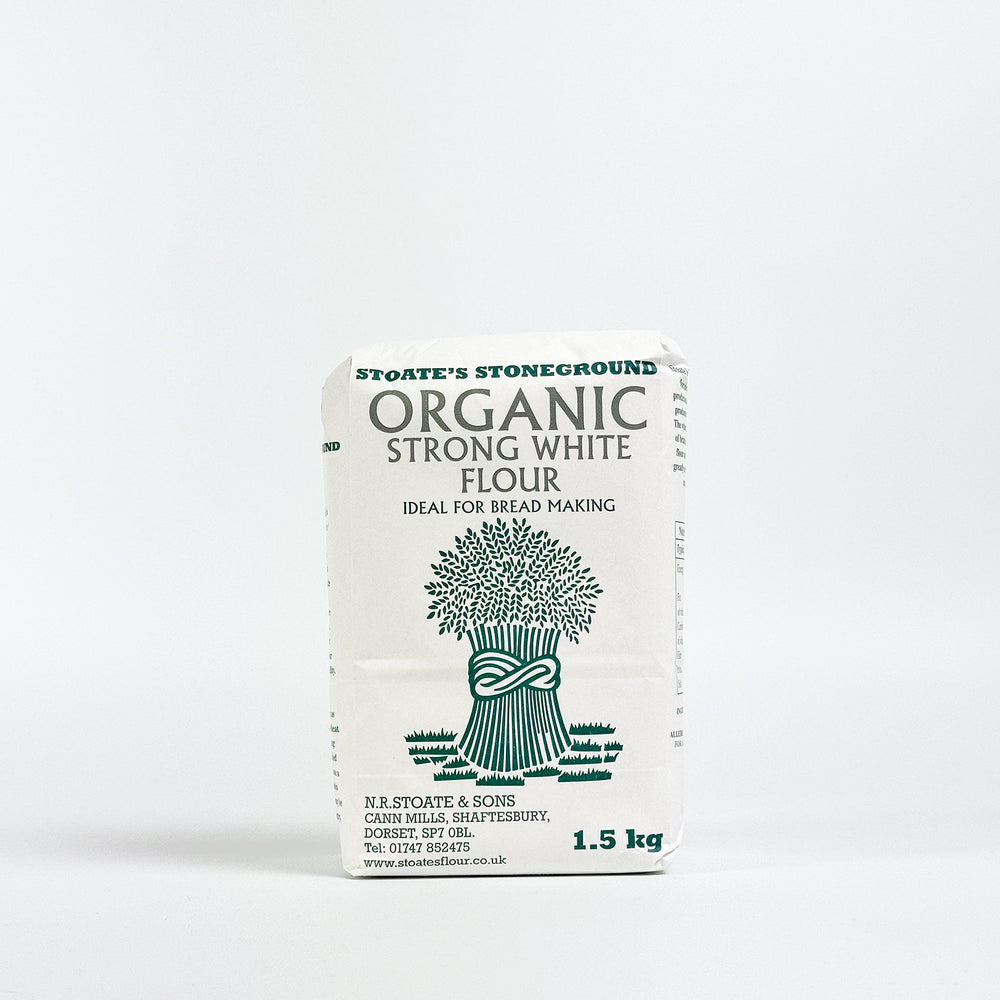
The difference is especially noticeable in Stoates Strong White Flour. Rather than producing a completely bright white roller-milled flour, Stoates takes 81% brown flour and sieves it further to remove the bran. The wheat germ is retained, giving the finished flour a creamy colour and fuller flavour.
Stoates Organic Stoneground Strong White Flour has a protein level of around 12.5%, making it well suited to breadmaking and naturally leavened doughs. It has the strength to support a well-risen loaf, while retaining the rounded, gently nutty character associated with stoneground flour.
The flour is also popular with artisan bakers who want more flavour in a simple white loaf. It is an excellent choice for sourdough, tin loaves, rolls, focaccia and other everyday breads where the flour itself should contribute something distinctive.
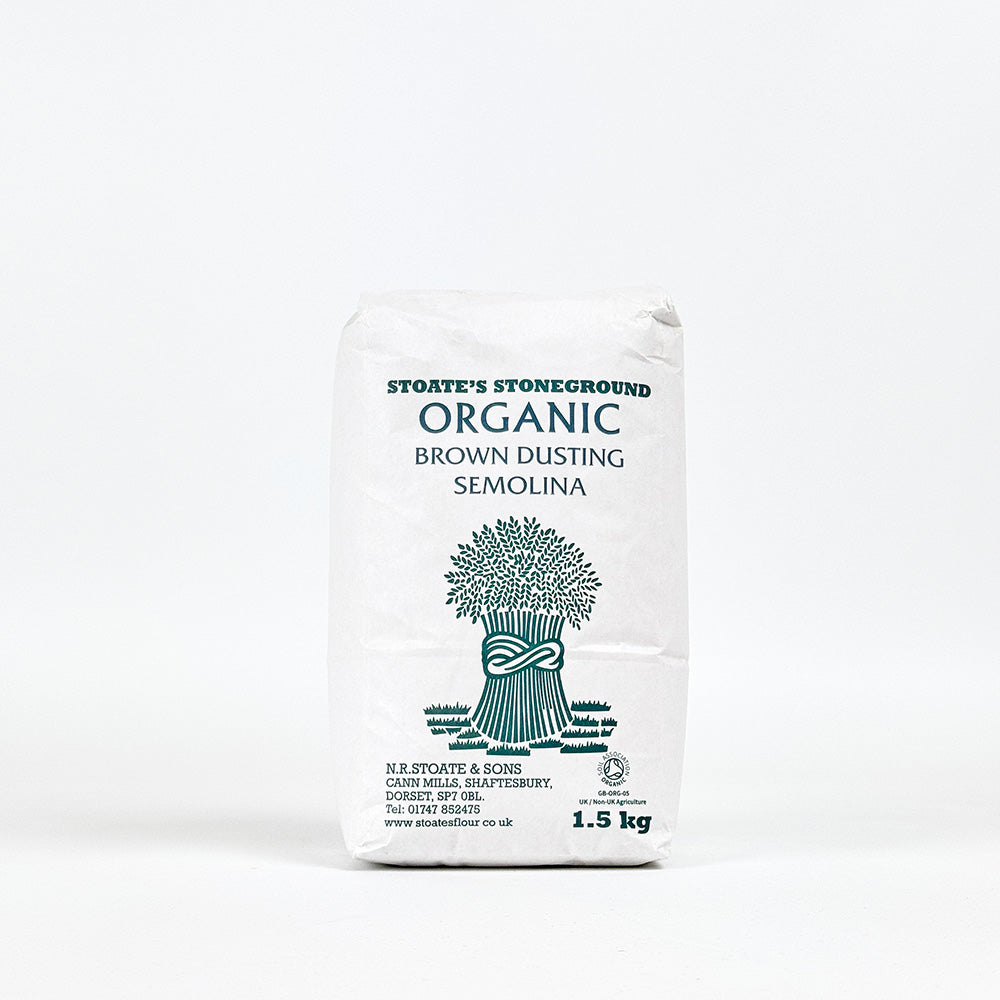
Stoates also makes good use of the whole grain. Its brown dusting semolina is a byproduct of milling and has a coarse, sandy texture with a warm golden colour. Scatter it over a peel or work surface to help dough slide smoothly into the oven. It is particularly useful for pizza and crusty bread.
The True South West range goes a step further, bringing together organic flour made with grain grown in the south west of England through the South West Grain Network. It offers a strong regional alternative for bakers who want to support a more local grain story.
In the Range at Ratton Pantry
Explore the full Stoates selection through our organic flours collection, or choose a flour for a particular style of baking.
For everyday bread
- Stoates Organic Stoneground Strong White Bread Flour – a creamy-coloured, full-flavoured organic strong white flour for loaves, rolls, sourdough and focaccia.
- Stoates Organic Stoneground Plain White Flour – a versatile option for cakes, biscuits, pastry and lighter bakes.
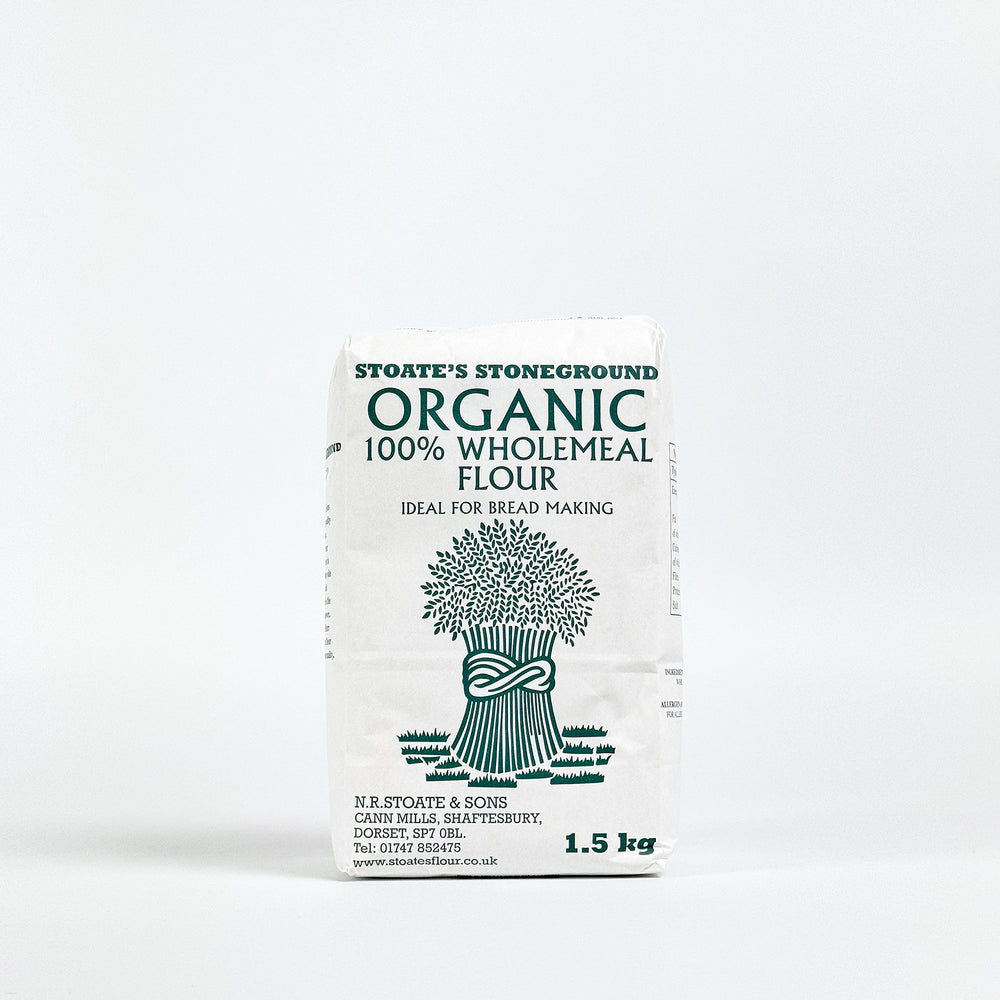
- Stoates Organic Stoneground Strong 100% Wholemeal Flour – made with the whole grain, including the natural fibre and wheat germ.
For deeper flavour and variation
- Stoates Organic Stoneground Rye Flour – earthy, aromatic and ideal for rye loaves or blending into wheat doughs.
- Stoates Organic Stoneground Light Rye Flour – a lighter way to bring rye’s gentle spice and depth to bread.
- Stoates Organic Stoneground Wholemeal Spelt Flour – nutty, fragrant and suited to rustic loaves and enriched doughs.
- Stoates Organic Stoneground Light Spelt Flour – a lighter spelt option for bread, pastry and everyday baking.
- Stoates Organic Stoneground Maltstar Granary Bread Flour – rich, malty and textured, with the character expected from a granary-style loaf.
For pizza, bread and regional baking
- Stoates Organic Stoneground Brown Dusting Semolina – coarse and golden, helping pizza and bread dough release cleanly from a peel.
- Stoates Organic True South West Stoneground Strong White Bread Flour – a regional artisan bread flour made with grain grown in the South West.
- Stoates Organic True South West Stoneground Wholemeal Bread Flour – a fuller, wholesome flour for traditional wholemeal loaves.
Which Stoates Flour Should You Choose?
- You want a versatile bread flour: choose Stoates Organic Stoneground Strong White.
- You want a traditional wholemeal loaf: choose Stoates Organic Stoneground Strong 100% Wholemeal.
- You are developing sourdough flavour: try Rye, Light Rye, Wholemeal Spelt or Light Spelt.
- You want a textured, malty loaf: choose Maltstar Granary.
- You need a flour for cakes and pastry: choose Plain White or Light Spelt.
- You need help with pizza or bread release: add Brown Dusting Semolina.
- You want a more local grain story: explore the True South West range.
Store flour somewhere cool, dry and airtight, and use it within the period suggested on the pack. Stoneground flour is full of character, so treating it well helps preserve its fresh aroma and baking performance.
Discover Stoates at Ratton Pantry
Stoates brings together British milling heritage, organic grain and practical performance for modern kitchens. Whether you are making your first loaf or supplying a busy bakery, there is a Stoates flour to suit the job.
Explore Stoates Unfortified Flour and order from Ratton Pantry with same-day dispatch on orders placed before 2pm, Monday to Friday. Express delivery options are also available.
For bakeries, cafés, pizzerias and other food businesses, our trade accounts offer tailored pricing, flexible delivery, bulk ordering and dedicated support. We’d be happy to help you choose the right pack sizes and arrange regular supply.
Stoates FAQs
What is Stoates flour?
Stoates flour is produced by Stoate & Sons, a family-owned British flour mill founded in 1832. The business now operates from Cann Mills near Shaftesbury in Dorset, producing organic stoneground flour using traditional French Burr millstones.
Is Stoates Strong White Flour stoneground?
Yes. Stoates Strong White Flour is stoneground and then sieved to remove more bran. It is made from 81% brown flour, creating a creamy-coloured white flour with a fuller flavour than a conventional roller-milled white flour.
Is Stoates flour unfortified?
Yes, Stoates’ current flour ingredient lists do not include added calcium carbonate, iron, niacin, thiamin or folic acid. Please check the current product label as the final reference, as formulations and labelling can change.
What is Stoates flour best used for?
Stoates Strong White is suitable for bread, sourdough, rolls and focaccia. The range also includes flours for wholemeal loaves, rye breads, spelt baking, granary-style bread, pastry, cakes and pizza.
Where does Stoates flour come from?
Stoates flour is milled at Cann Mills near Shaftesbury in Dorset. The mill uses French Burr millstones powered by the River Sturkel. Its True South West range uses grain grown in the south west of England through the South West Grain Network.
Is Stoates flour suitable for professional bakers?
Yes. Stoates supplies both home bakers and professional bakeries. Larger pack sizes, including 8kg bags and 25kg sacks on selected products, make the range suitable for regular production and trade use.
Leave a comment