



Wildfarmed: How Regenerative Farming Is Reshaping British Bread Flour
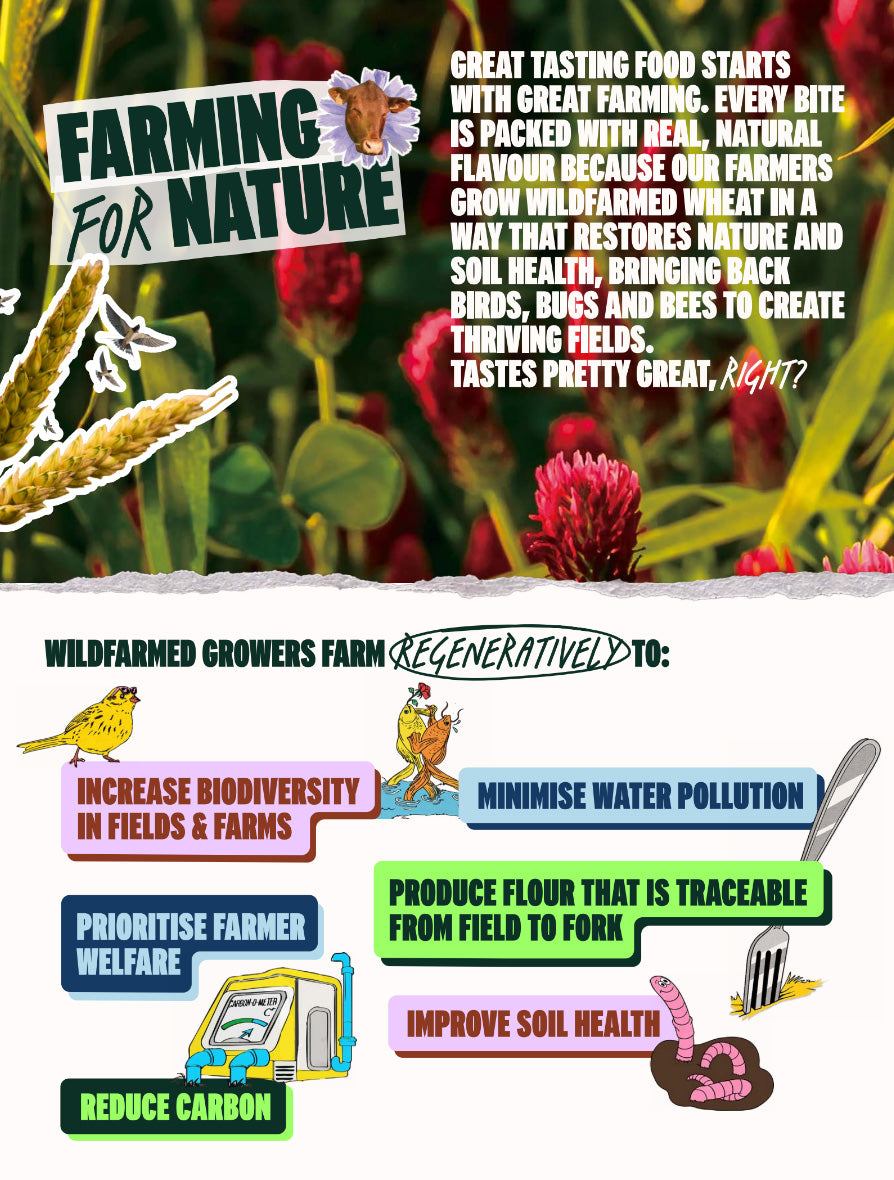
When you buy flour, the farming system behind it can be just as important as how it performs in your mixing bowl. Wildfarmed brings those two decisions together, producing British flour from grain grown under a defined regenerative standard.
Founded by award-winning farmer and musician Andy Cato, television presenter George Lamb and former financier Edd Lees, Wildfarmed works with farmers to improve soil health, biodiversity and farm resilience while reducing reliance on agricultural inputs. The grain is then processed into flour for home bakers, artisan bakeries, restaurants and professional kitchens.
At Ratton Pantry, we are proud to stock Wildfarmed because it offers practical, reliable flour alongside a clear route from farm to finished product. This is not a niche range for occasional use. It covers everyday bread, sourdough, pizza, pastry, cakes and professional bread production.
From Regenerative Fields to British Flour
Wildfarmed began taking shape around 2018, when Andy Cato, George Lamb and Edd Lees started working together on a scalable approach to regenerative farming. The business was formally established in 2020.
Andy brought practical farming experience developed through years of experimentation on degraded soils in France. His work combined techniques such as reduced soil disturbance, diverse cropping and maintaining living cover on the land. He is also an award-winning farmer and a Grammy-nominated musician, which makes Wildfarmed’s origin story rather more distinctive than most.
George brought experience in broadcasting and public communication, while Edd contributed a background in financial markets and business development. Together, they set out to build a food system that connected growers, millers, bakers and customers more directly.
Wildfarmed flour first entered a UK bakery in 2018. The business has since grown from an early network of farms and customers into a wider supply chain serving retail, food service and professional kitchens.
The company’s standards have also developed. Wildfarmed’s current approach is outcome-focused, measuring improvements in areas such as soil health, biodiversity, water quality and resilience rather than relying on a simple “no inputs ever” message.
Insecticides are not permitted. The 2026 standard allows tightly controlled use of some other crop-protection tools in defined circumstances, including targeted herbicide use where it can reduce soil disturbance, and a very limited fungicide derogation where there is a proven risk of total crop loss. Grain is tested for pesticide residues through the supply chain.
That measured approach matters. Regenerative farming is a developing system, and responsible standards need to recognise the conditions farmers actually face while keeping environmental outcomes firmly in view.
Why We Stock Wildfarmed
Regenerative farming as part of the product choice
Wildfarmed gives us a way to offer flour where the farming system is part of the decision rather than an afterthought. That fits closely with our commitment to sourcing from regenerative producers and supporting more responsible food systems. Learn more about sustainability at Ratton Pantry.
A range for serious baking
This is not simply a specialist flour for occasional experiments. Wildfarmed covers strong white, higher-extraction, wholemeal, pizza, pastry, cake and general-purpose flours, making it suitable for both home bakers and professional kitchens.
Choice within one regenerative supply model
You can move from an airy white sourdough to a darker wholemeal loaf, then use a dedicated pizza flour or delicate pastry flour, while staying within the Wildfarmed range.
Traceability through the supply chain
Wildfarmed works with growers under defined standards, and grain is tested for pesticide residues at different stages. This gives customers a clearer connection between the field, the mill and the flour in their cupboard.
What Makes Wildfarmed Flour Worth Buying?
Flour with a clear farming story
Regenerative farming focuses on measurable improvements to soil health, biodiversity and resilience. Wildfarmed’s approach includes crop diversity, soil cover, reduced disturbance and working with nature to build more resilient growing systems.
The aim is not to make a vague environmental claim. It is to create a defined route through which farming practices and outcomes can be monitored, reviewed and improved.
Flour that performs in the kitchen
Wildfarmed flour is milled for practical baking. The White Bread Flour is a versatile, elastic and easy-rising option for loaves, rolls, buns and baps. Its approximately 11% protein content makes it a useful starting point for everyday bread and lighter sourdough.
The dedicated Pizza Flour is strong and stretchy, helping create dough suited to golden, crunchy crusts and a satisfying chewy bite. It is worth choosing this flour specifically rather than assuming every strong bread flour will behave the same way.
For professional bread production, Wildfarmed also offers Bakers Blend products designed for the demands of commercial baking.
Understanding T numbers
The T number used on several Wildfarmed flours refers broadly to ash or mineral content. It indicates how much of the grain remains after milling, rather than directly measuring protein or dough strength.
- T55 and T65: Relatively light, refined flour styles.
- T80: A higher-extraction flour with more grain character, flavour and colour.
- T150: Wholemeal flour containing the full grain.
A higher T number does not automatically mean a stronger flour. It tells you more about extraction and mineral content, while factors such as wheat variety, protein and milling also influence how a dough behaves.

In the Range at Ratton Pantry
Explore the full Wildfarmed collection, including retail bags and larger formats for professional kitchens.
Bread and sourdough
- Wildfarmed White Bread Flour (T65) – A versatile, elastic flour for loaves, rolls, buns and lighter sourdough.
- Wildfarmed Rustic White Flour (T80) – Fuller-flavoured and more characterful, with a higher extraction than T65.
- Wildfarmed Wholemeal Flour (T150) – Unrefined wholemeal flour with a malty, nutty flavour and a naturally darker crumb.
These make a practical foundation for your sourdough baking supplies. Use T65 for a lighter loaf, T80 for more flavour and colour, or blend in wholemeal to add depth without making the dough entirely wholegrain.
Pizza and flatbreads
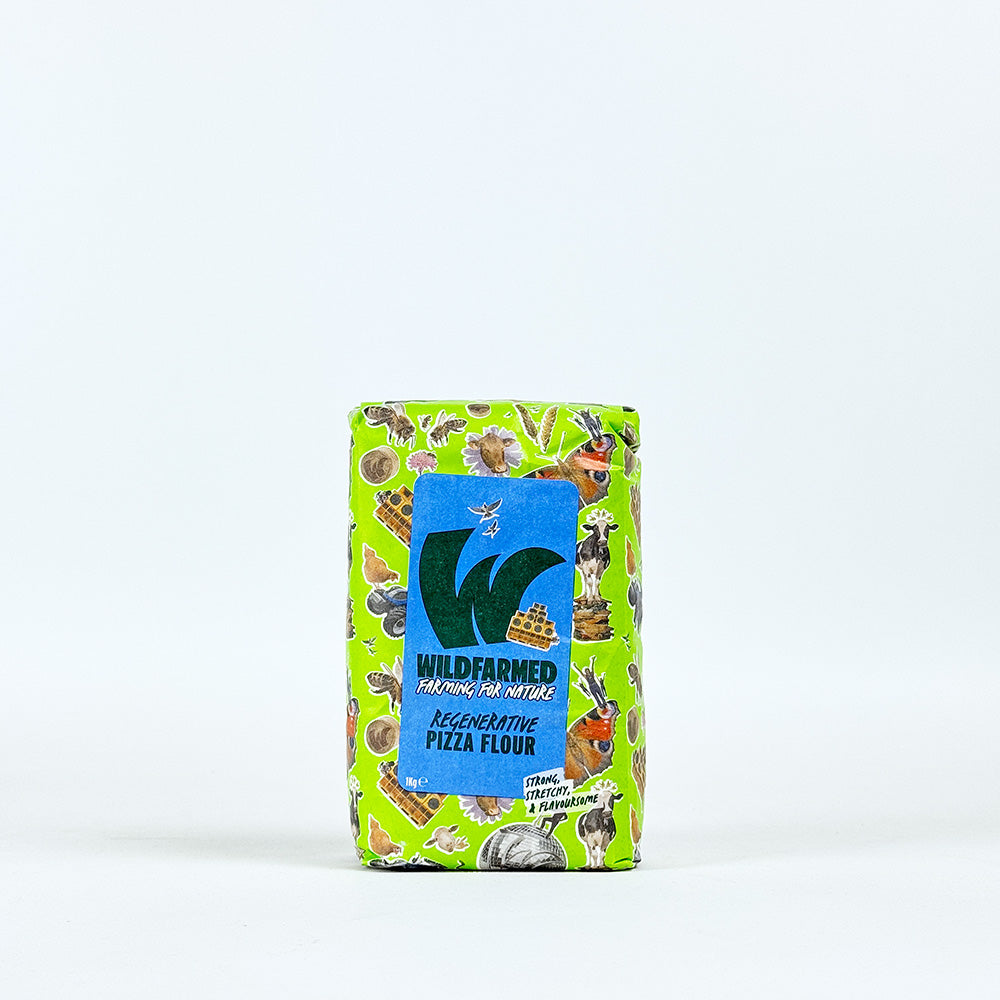
- Wildfarmed Pizza Flour – A dedicated option for stretchy dough, crisp edges and chewy pizza bases.
Pastry and general baking
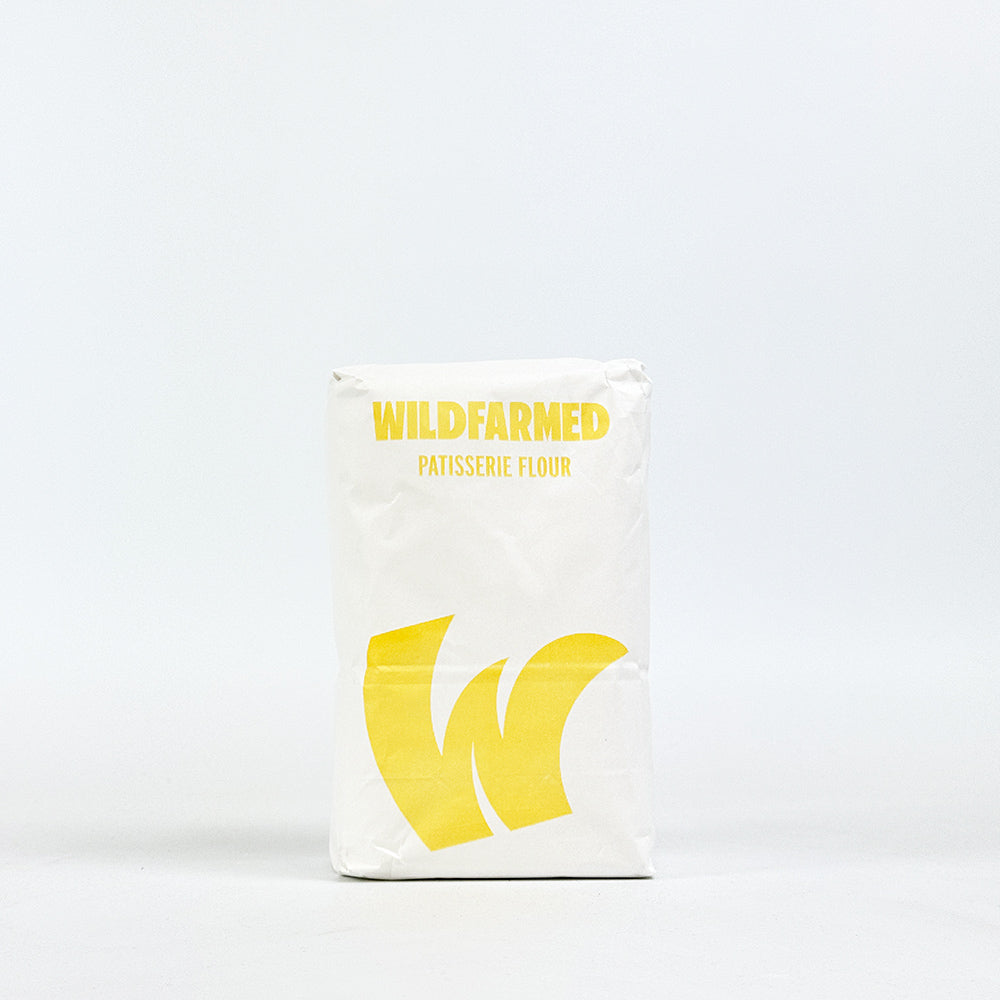
- Wildfarmed Patisserie Flour (T55) – A fine, delicate flour for pastry, cakes and lighter bakes.
- Wildfarmed Viennoiserie Blend Flour (T45) – Developed for enriched doughs and laminated baking.
- Wildfarmed Plain Flour – A dependable everyday choice.
- Wildfarmed Self-Raising Flour – Convenient for cakes, scones and lighter bakes.
Regenerative oats
Wildfarmed’s farming model extends beyond wheat. The range also includes Regenerative Porridge Oats, Regenerative Medium Oats and Regenerative Jumbo Oats.
Choose fine porridge oats for a smooth, creamy bowl, medium oats for everyday baking and breakfast recipes, or jumbo oats for a more substantial texture in granola and flapjacks.
Which Wildfarmed Flour Should You Choose?
- For a lighter sourdough: Start with White Bread Flour T65. You can blend in T80 or wholemeal for extra flavour.
- For a more rustic loaf: Choose Rustic White T80 or combine it with T150 wholemeal.
- For a full wholegrain loaf: Use Wholemeal T150, adjusting hydration as wholemeal flour absorbs more water.
- For pizza: Choose the dedicated Pizza Flour for dough designed around a crisp crust and chewy bite.
- For cakes and pastry: Choose Patisserie T55, Plain or Self-Raising Flour depending on your recipe.
- For croissants and enriched doughs: Try the Viennoiserie Blend T45.
- For professional bread production: Explore the Bakers Blend formats and larger sacks.
Bring Regenerative Flour into Your Kitchen
Wildfarmed makes it easier to choose a flour that works hard in the kitchen while keeping the farming system in view. From everyday loaves and sourdough to pizza, pastry and porridge, the range offers practical choice without losing sight of where the grain began.
Explore regenerative flour and discover the wider selection of baking supplies online at Ratton Pantry.
Orders placed before 2pm Monday to Friday benefit from same-day dispatch, with express next-day delivery options available. If you are ordering for a bakery, pizzeria, café or food business, apply for a Ratton Pantry trade account and let us help you source the right formats for your kitchen.
Wildfarmed Regenerative Flour FAQs
What is Wildfarmed?
Wildfarmed is a British regenerative agriculture company founded by Andy Cato, George Lamb and Edd Lees. It works with farmers to grow wheat and other crops under defined regenerative standards, then processes that grain into flour and other food products.
What does regenerative farming mean at Wildfarmed?
Wildfarmed’s approach focuses on measurable improvements in soil health, biodiversity and resilience while reducing reliance on agricultural inputs. Its standards consider factors such as crop diversity, soil cover, reduced disturbance and environmental outcomes.
Is Wildfarmed flour completely pesticide-free?
No blanket “chemical-free” or “pesticide-free” claim should be made. Insecticides are not permitted, while the current 2026 standard allows targeted herbicide use in defined circumstances and a tightly controlled fungicide derogation where there is a proven risk of total crop loss. Grain is tested for pesticide residues through the supply chain.
What is the difference between T65, T80 and T150 flour?
The T number broadly refers to ash or mineral content and indicates how much of the grain remains. T65 is relatively light, T80 retains more grain character and T150 is wholemeal. The number is not a direct measurement of protein or dough strength.
Which Wildfarmed flour is best for sourdough?
White Bread Flour T65 is a good base for a lighter sourdough. T80 or Wholemeal T150 can be used alone or blended with a lighter flour when you want more grain flavour, colour and character.
Does Wildfarmed make a dedicated pizza flour?
Yes. Wildfarmed Pizza Flour is designed specifically for pizza and flatbreads. It is a strong, stretchy option for doughs with golden crusts and a chewy bite.
Can professional kitchens buy Wildfarmed flour?
Yes. Ratton Pantry offers selected Wildfarmed products in larger formats, including flours suited to professional bread production. Commercial customers can also apply for a trade account for tailored support.
Leave a comment